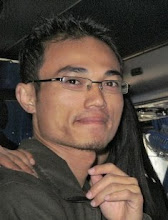
I am a wee bit aware about the person I am covering on this specific blog - Deepak Chopra. He is a popular & well known figure, a motivational speaker by professon. That's all. Period.
A little more. To the best extent that I know and a general impression I carry about him: Deepak Chopra has dissipated a lot of helpful information across the country to bring up the consciousness level of our countrymen and institutions that drives our country. He is the type of swimmer, better call a diver, who dives to the deepest strata of the 'ocean of wisdom' to harvest the purest crop to inject into humankind - grains of pure wisdom. Nourishing grains that help us grow healthy, wealthy and wise.
It is very much possible that I may've received the rains of his wisdom directly or indirectly. In hindsight, I think I can cite an example how I have gained something from him/his words.
India is on the list of 'least transparent country'. This is an unfortunate truth revealed in every yearly report released worldwide. There's quite a binful of corruptions and fishy transactions, I don't deny that. One of the most powerful message Deepak Chopra left for the current generation of Indians is: If you are able to sleep peacefully when injustice is happening in your neighborhood, just wait for your turn. Indirectly, he is telling us to come out of our private shells and live collectivly.
In New Delhi, cars and sedans carry a poster of this message, it's a common sight. The message is printed on the thin semi-transparent sheet acting as sun blocker at the rear side of the vehicles. I ride a motorbike and face this message all the time on the roads! On every day basis, I make the best of my time and efforts to connect with people I work with, dine with, travel with, play with, win or lose with...
I am pleased to share a recent article. It's about the current global financial crisis staring at every nation's face. You will like it, I assure you :-)
When a box turtle is crossing the road and it hears a car coming, it reacts by drawing in its head and feet, contracting for protection. Evolution has kept turtles alive for hundreds of millions of years that way. What works as a natural defense isn't much use, though, when a Yukon or Explorer is barreling toward you. There are times when contracting inward is the very worst thing you can do.
That's true now in the recession that economists see barreling toward us — the road noise has gotten alarmingly loud already. But as the economy contracts, we must resist our natural reflex to contract with it. Instead, we need to do the opposite. Expansion is the best way to survive any crisis.
The lesson should have sunk in after 9/11, when the whole country learned what it means to contract with fear, anxiety, suspicion, and distrust. We felt threatened by a vast, unseen enemy, which was magnified as large as fear itself.
Fear deprives people of choice. Fear shrinks the world into isolated, defensive enclaves. Fear spirals out of control. Fear makes everyday life seem clouded over with danger.
A lot of people are approaching the economy that way, and not enough leaders are warning them that it's the worst possible reaction.
To be happy in a recession means, first and foremost, resisting all the threats that fear possesses. Don't obsess anxiously over what you could lose. Don't reduce your world to a bank account or a 401k. Isn't there an upside to losing some "consumer buying power"? To be honest, we went too far with consumerist mania. By any measure this is an inordinately rich country, and instead of mourning sagging profit margins, can't we use the current slowdown to ask what makes for true personal happiness?
Relationship. Gratitude. Appreciation. Compassion. Mutual regard. Strong social connections. Love you can trust.
I don't know why it takes a crisis to bring out those fundamental human qualities. But it often does. We all realize that the next video game, the next new car, the next flat-screen TV means nothing compared to the rewards of relating to other people. Yet we live as if the opposite is true. The pursuit of happiness is blocked just as much by indulgent over-consumption as by an economic downturn. More, in fact. An impoverished country like Nigeria recently scored number one in a survey of the happiest countries on earth, while the U.S. has never broken the top ten in any such survey.
Some may protest that expanding and becoming more human is all well and good if you have a job but totally unrealistic if your livelihood is threatened. I don't think so. Whatever happens, the worst-off will be the ones who need more compassion, kindness, and relating to. They will need real coping skills, not a show of group pity.
There's a lot more to say about how to be happy in a recession, but the main thing is to remind yourself that it's possible. Refuse to contract just because the economy does. You have the tools to be happy in the worst of times. They're just hidden under the box your new iPhone came in.
Courtesy Mr DEEPAK CHOPRA.
Deepak is the author of over 50 books on health, success, relationships and spirituality, including his latest novel, "Jesus: A Story of Enlightenment," available now at http://www.deepakchopra.com/. He is an Adjunct Professor at Kellogg School of Management.
Thursday, November 20, 2008

Tuesday, November 18, 2008
A fond weekend with Regha Tirtha Yatra travelers.
Mr. Mano and his mother accompanied with his sisters were set to visit The Jagat Jyoti Buddha Vihar, New Delhi. They were also joined by Deva in their car. They offered a lift which I declined politely. I prefer to bike on my own these days. I have learned to travel faster by bike in a city like Delhi.Within no time, I reached the temple gate by following the Ring Road motorway. It was a quick ride and I waited outside the temple’s entrance gate a long while for the Mano & co. to arrive. Unfortunately, they would never make it as I would later find out that their car broke down half-way. So, I walked alone into the temple/The Jagat Jyoti Buddha Vihar is a well-kept temple in a pocket of East of Kailash. It is mentionable that the Vihara sits upon a sizeable plot of land. If you know East of Kailash is situated in south Delhi and this south of Delhi is brutally expensive, you understand why I must make a mention. The foundation stone of the Vihara was laid in 1966 by the incumbent Vietnamese Ambassador to India then. It is quite easy to locate because the Vihara is on the same street as the ISKCON temple, one of the boldest landmarks of the capital. Personally, I have known its specific location since the last couple of years because my office site is just a stone throw distance from it. Even better, one of my co-workers that I closely gel with resides exactly opposite its main gate.Once inside the temple premise, I was amazed to discover a wondrous sight. There was ample more than the reclining Buddha statue, normal rows of lighted candles and wafts of incense in the wintry air. I caught a sea of Chakma! Instantly, my heart brimmed with elation alike Tennyson's upon sighting a bloom of colorful daffodils...
Awe-struck, I retained myself at one spot and simply look about the place and the multitude, so many of them all at once! Beyond the prayer hall, many swarmed on the courtyard and grassy lawns. They were majorly elderly men and women. All Aju & Be-Beis!
This Vihara serves as a halting point for them. If I am right, every bone was mighty tired after a lengthy cross-country bus ride but they belied any of it with their cheerful smiles, lively chatters and unbridled excitement upon meeting New Delhi city. The women carried traditional attires in which they looked really graceful and unique! I noticed some of them used their colorful khadis conveniently as head scarves to beat the nibbling cold. After a short while, it came natural to me to get close and greet and to introduce myself and to vow before them. We lit warm conversations instantly. I was asked a common question by most of them: which state that I hail from, where I lived in the city, how far was the place from that temple, what do I do - study? When I reply no to their last question, they curiously waited me to tell the type of job I do. In a way, it is fun to answer because you felt like being the most talked about person in the whole town! I tried to satisfy them by giving honest answers. After I had spoken each time one of them would quip "saw de sey" which loosely meant "ah, look, very good, very good". I entertained all their inquiries with an open mind. In my prosperity and happiness, they found rejoice.In between, I did some quick maths and also put myself in their shoes. I thought if I were one of them, I would not know how to drive a bike or operate a simple cell phone, not know how to bargain with the local shopkeepers due to language barrier, not know to read any English or Hindi road signs, just meaningless signboards. Similarly, the essential morning newspaper on the front porch of the temple wouldn't interest me either. Let’s keep aside internet, shall we? As you do deeper introspection on the topic, you find out that these Ajus and Be-Beis live without many things in life. The lives they lead look both shallow and hollow.
Standing on the same ground in the heart of a modern city like New Delhi - an educated man amidst a bunch of 'Ajus and Be-Beis' - there was certainly very less common between I and them except our connection by blood, a native language, the traditional attires, our unshakeable faith in Buddhism and a common taste of food. This is sad, at the same time it is bound to be for such is the fate of our community.
In the course, I got a chance to connect with Mr Pradhir Talukdar of Regha fame who took the lead on this pilgrimage. I found it very pleasing to converse with him, the more we chatted, the more I got infected with his words and his goals for our Chakma Buddhist community. I noted he has a distinctly greater hold of the original Chakma language, application of the proper dictions and countless interesting, uncommon phrases. After listening to him for quite a while, I do believe that his words relay a certain powerful impact to the listener’s ears. When he says, he could say it, whatever it was, the same thing, in a very different style. Listen to this you would appreciate it: our Chakma community carries a mighty 'hallongful' of past misery and impoverished present.
I was told that this pilgrimage is being operated under the banner of Regha Tirtha Yatra. Once I found out how big the group was, I thought I could nearly form 5 soccer teams out of them. As I learnt about their travel itinerary, I could hardly hold booking myself a seat with this group. Their next day plan was to fulfil their appointment with the Taj Mahal, one of the Seven Wonders of the World! Everyone was looking forward to the over-night journey for they shall enter the monumental gates of the famous Mahal in the next 12 hours!
On that particular happy evening, by joining into their fold, I found myself often carried away into a maze of thoughts.
At the turn of the 21st century, it is a minuscule minority of our tribe that has shown the will and courage to venture out from the jungle borders and started to live in metropolitans cities like Guwahati, Kolkata, Hyderabad and New Delhi. The number is discouraging but we will concentrate on its significance rather. Let’s use a metaphor. If our whole tribe be taken as a hunting spear, the pointed-tip is the minuscule minority that thrives today among India’s top metros. It’s you and I. It’s a bachelor or a household man. It’s a layman or a Dhamma guru. I recall a respectable person addressing a congregation at Ashoka Buddha Vihara saying –“folks, please realize that we are all blessed. We have a good reason to be here. We walk the heart of India where thousands of our tribesmen shall never come to walk or had our forefathers either. Let's perform our respective duty and study and live in a discipline way. Let’s grab this golden opportunity.” Leave aside from the city; let’s look at one of the far flung Chakma village nestled in the North-East of India. To this today, it is only common in our community to find that that the best-ornamented Chakma couple will seldom cross 2-rivers-and-3-villages before halting and turning back homeward. It is also true for our grandmother to walk probably 4 hours far from her village to join her grandchildren at the next and halt. We are a weak community with weak people to take weak strides.Today, let's recall what our local boy does in his native environment. Our local boy meets his field at day-break that he ploughs hard for long hours, whiles away the afternoon grazing the cows, and retires early to bed along with his animals in rhythm with the movement of the sun. He who rises and retires with the sun is our living, local boy. However, like you and I who live in the city, when he reaches for his bed at night, there is no power that can arrest him from being an emperor as long as he is curled in his deep slumber. Lamentably, each following day he wakes up to resume the same, sorry, back-breaking 'field-plough-graze' routine. This is the characteristic of our tribe. This is our reality. This is how poorly we perform & act as an individual or community in whole. A small tribe, small measures; small tribe, small steps!
By joining into their fold, there was a new heart rhyming with the withered hearts. But the mixed throbs of our hearts in unison gave rise to many happy thoughts and happy faces, peeling away all signs of fatigue and nausea and homesickness. Each Aju and Be-Bei literally seem held so much revitalized energy in their bodies upon alighting in New Delhi, I thought, if I had taken their joyful group to a theatre-hall I could tell you that not a single body would have drifted away to counting sheep! I didn't do any spectacular, however, there was another light but benign task that I could easily do: offering each a bottle of water. My beloved Dhamma teacher from Thailand always says, no need to travel all the way to offer, offer not to me but start from within, start from your immediate surroundings, service anybody, any life.
Leaving aside everything, what is distinctly new in this group travelling under the banner of 'Regha Tirtha Yatra'? Is there a special message for all of us? How can an individual of the Chakma tribe better himself or herself? How can the collective community speed up and be better?
A luscious moon surrounded by a constellation of sparkling stars shone at me and the pilgrims. As an onlooker, I posed some of these questions before myself. And, I'm glad my conscience awakened me to this thought. I can gladly conclude that, yes, there was a message for all of us. Besides the strong Regha pillar and many wrinkled faces, one of our best-ornamented Chakma couple including one grandmother was part of this travelling group. The couple and grandmother have crossed 2000 miles far to a 21st century metropolitan city like New Delhi by leaving their home far behind! Very Symbolic! Very, very symbolic!
*[I am humbled to take the name of Mr. Pradhir Talukdar of REGHA Society and amateur videographer, Mr Anand Chakma. I wish I could thank you enough for volunteering with full enthusiasm and making this walk happen. It is true that each ‘Aju’ and ‘Be-Bei’ of this group has walked a memorable journey in your noble company. Last but not the least, viewed from a different perspective, yours is also an act of leadership.]
Awe-struck, I retained myself at one spot and simply look about the place and the multitude, so many of them all at once! Beyond the prayer hall, many swarmed on the courtyard and grassy lawns. They were majorly elderly men and women. All Aju & Be-Beis!
This Vihara serves as a halting point for them. If I am right, every bone was mighty tired after a lengthy cross-country bus ride but they belied any of it with their cheerful smiles, lively chatters and unbridled excitement upon meeting New Delhi city. The women carried traditional attires in which they looked really graceful and unique! I noticed some of them used their colorful khadis conveniently as head scarves to beat the nibbling cold. After a short while, it came natural to me to get close and greet and to introduce myself and to vow before them. We lit warm conversations instantly. I was asked a common question by most of them: which state that I hail from, where I lived in the city, how far was the place from that temple, what do I do - study? When I reply no to their last question, they curiously waited me to tell the type of job I do. In a way, it is fun to answer because you felt like being the most talked about person in the whole town! I tried to satisfy them by giving honest answers. After I had spoken each time one of them would quip "saw de sey" which loosely meant "ah, look, very good, very good". I entertained all their inquiries with an open mind. In my prosperity and happiness, they found rejoice.In between, I did some quick maths and also put myself in their shoes. I thought if I were one of them, I would not know how to drive a bike or operate a simple cell phone, not know how to bargain with the local shopkeepers due to language barrier, not know to read any English or Hindi road signs, just meaningless signboards. Similarly, the essential morning newspaper on the front porch of the temple wouldn't interest me either. Let’s keep aside internet, shall we? As you do deeper introspection on the topic, you find out that these Ajus and Be-Beis live without many things in life. The lives they lead look both shallow and hollow.
Standing on the same ground in the heart of a modern city like New Delhi - an educated man amidst a bunch of 'Ajus and Be-Beis' - there was certainly very less common between I and them except our connection by blood, a native language, the traditional attires, our unshakeable faith in Buddhism and a common taste of food. This is sad, at the same time it is bound to be for such is the fate of our community.
In the course, I got a chance to connect with Mr Pradhir Talukdar of Regha fame who took the lead on this pilgrimage. I found it very pleasing to converse with him, the more we chatted, the more I got infected with his words and his goals for our Chakma Buddhist community. I noted he has a distinctly greater hold of the original Chakma language, application of the proper dictions and countless interesting, uncommon phrases. After listening to him for quite a while, I do believe that his words relay a certain powerful impact to the listener’s ears. When he says, he could say it, whatever it was, the same thing, in a very different style. Listen to this you would appreciate it: our Chakma community carries a mighty 'hallongful' of past misery and impoverished present.
I was told that this pilgrimage is being operated under the banner of Regha Tirtha Yatra. Once I found out how big the group was, I thought I could nearly form 5 soccer teams out of them. As I learnt about their travel itinerary, I could hardly hold booking myself a seat with this group. Their next day plan was to fulfil their appointment with the Taj Mahal, one of the Seven Wonders of the World! Everyone was looking forward to the over-night journey for they shall enter the monumental gates of the famous Mahal in the next 12 hours!
On that particular happy evening, by joining into their fold, I found myself often carried away into a maze of thoughts.
At the turn of the 21st century, it is a minuscule minority of our tribe that has shown the will and courage to venture out from the jungle borders and started to live in metropolitans cities like Guwahati, Kolkata, Hyderabad and New Delhi. The number is discouraging but we will concentrate on its significance rather. Let’s use a metaphor. If our whole tribe be taken as a hunting spear, the pointed-tip is the minuscule minority that thrives today among India’s top metros. It’s you and I. It’s a bachelor or a household man. It’s a layman or a Dhamma guru. I recall a respectable person addressing a congregation at Ashoka Buddha Vihara saying –“folks, please realize that we are all blessed. We have a good reason to be here. We walk the heart of India where thousands of our tribesmen shall never come to walk or had our forefathers either. Let's perform our respective duty and study and live in a discipline way. Let’s grab this golden opportunity.” Leave aside from the city; let’s look at one of the far flung Chakma village nestled in the North-East of India. To this today, it is only common in our community to find that that the best-ornamented Chakma couple will seldom cross 2-rivers-and-3-villages before halting and turning back homeward. It is also true for our grandmother to walk probably 4 hours far from her village to join her grandchildren at the next and halt. We are a weak community with weak people to take weak strides.Today, let's recall what our local boy does in his native environment. Our local boy meets his field at day-break that he ploughs hard for long hours, whiles away the afternoon grazing the cows, and retires early to bed along with his animals in rhythm with the movement of the sun. He who rises and retires with the sun is our living, local boy. However, like you and I who live in the city, when he reaches for his bed at night, there is no power that can arrest him from being an emperor as long as he is curled in his deep slumber. Lamentably, each following day he wakes up to resume the same, sorry, back-breaking 'field-plough-graze' routine. This is the characteristic of our tribe. This is our reality. This is how poorly we perform & act as an individual or community in whole. A small tribe, small measures; small tribe, small steps!
By joining into their fold, there was a new heart rhyming with the withered hearts. But the mixed throbs of our hearts in unison gave rise to many happy thoughts and happy faces, peeling away all signs of fatigue and nausea and homesickness. Each Aju and Be-Bei literally seem held so much revitalized energy in their bodies upon alighting in New Delhi, I thought, if I had taken their joyful group to a theatre-hall I could tell you that not a single body would have drifted away to counting sheep! I didn't do any spectacular, however, there was another light but benign task that I could easily do: offering each a bottle of water. My beloved Dhamma teacher from Thailand always says, no need to travel all the way to offer, offer not to me but start from within, start from your immediate surroundings, service anybody, any life.
Leaving aside everything, what is distinctly new in this group travelling under the banner of 'Regha Tirtha Yatra'? Is there a special message for all of us? How can an individual of the Chakma tribe better himself or herself? How can the collective community speed up and be better?
A luscious moon surrounded by a constellation of sparkling stars shone at me and the pilgrims. As an onlooker, I posed some of these questions before myself. And, I'm glad my conscience awakened me to this thought. I can gladly conclude that, yes, there was a message for all of us. Besides the strong Regha pillar and many wrinkled faces, one of our best-ornamented Chakma couple including one grandmother was part of this travelling group. The couple and grandmother have crossed 2000 miles far to a 21st century metropolitan city like New Delhi by leaving their home far behind! Very Symbolic! Very, very symbolic!
*[I am humbled to take the name of Mr. Pradhir Talukdar of REGHA Society and amateur videographer, Mr Anand Chakma. I wish I could thank you enough for volunteering with full enthusiasm and making this walk happen. It is true that each ‘Aju’ and ‘Be-Bei’ of this group has walked a memorable journey in your noble company. Last but not the least, viewed from a different perspective, yours is also an act of leadership.]
Wednesday, November 5, 2008
The Ashoka Buddha Vihara, Rajghat
A monk will refrain from touring or visiting far-away places for three months and remain preoccupied - practicing perfection of the Vinaya rules and reflecting on the patimokkha and spreading purity, sanctity and holiness all over the shrine room in the process. Disdainfully, sans a monk or any auspicious rituals, our temple is a dull residue. It stands like an oak in winter ridden of its leaves. If you go to visit, the void is so big that it almost infects you.
I've lived 3 years of my life within the environs of a strict Thai monastery. The past experiences and background perhaps has a bearing over my mind that leads me to a closer affinity with temples and monasteries wherever I travel in India. I am more receptive to the changes in our temple therefore. It is not a good feeling to find a solitary temple in the middle of the capital city of India. I would consider that we are poorer today than yesterday without a bhikkhu. We like to believe that we live as a community; however, to me, this is a simple 'collection of people' standing under a roofless sky. This is an unfortunate fate. It is truly a matter of regret. Can we not take a quick step to lift the current situation? Do we really need to endure such a unfortunate fate? We must start to raise efforts and create a rescue plan.
We have a choice today. If all of us desire, the collective merits & skills could be easily redeemed towards atemple and a monk. We mix and assist one another so much, directly and indirectly, during the process, every one of us is constantly gaining good merits finally whose collective dose should be powerful enough to produce an very very positive karma, for example, a temple and a monk.....
By November, Buddhist monasteries all over the face of the globe will see a flurry of activities as the Vassa comes to a draw. At this moment of time, a true follower of the Buddhasasana with a begging bowl, walking stick and cibaras is practicing more suttas, dwells deep inside the pages of the holy Dhammapada to cultivate deeper dhamma because there will be a grand occasion to mark the end of the Vassa where the Sangha shall be presenting its dhamma skills to the larger lay community. In turn, the lay people will congregate and come prepared with the best gift and dana for the monks. Cibaras will be donated graciously for the monks. Kathina Cibara Dana is a landmark occasion held annually and the occasion is not so far from now.
November is upon us. How are we preparing as a Buddhist community in New Delhi? The future does not look promising the way things presently are. In retrospect, when the existing resident monk vacated his residency from the temple, our Chakma Buddhist Society failed to make an effective announcement regarding the unfortunate development. There may be many of us who did not get any information & specific information until belatedly. We needed a clarion call incisive enough to pierce the distance and reach everbody of our 250-odd strong community based in New Delhi. A weak voice reflects a weak and meek and defeated Society; a strong voice reflects a strong and progressive and robust Society.
May all beings find bliss including me :-)
I've lived 3 years of my life within the environs of a strict Thai monastery. The past experiences and background perhaps has a bearing over my mind that leads me to a closer affinity with temples and monasteries wherever I travel in India. I am more receptive to the changes in our temple therefore. It is not a good feeling to find a solitary temple in the middle of the capital city of India. I would consider that we are poorer today than yesterday without a bhikkhu. We like to believe that we live as a community; however, to me, this is a simple 'collection of people' standing under a roofless sky. This is an unfortunate fate. It is truly a matter of regret. Can we not take a quick step to lift the current situation? Do we really need to endure such a unfortunate fate? We must start to raise efforts and create a rescue plan.
We have a choice today. If all of us desire, the collective merits & skills could be easily redeemed towards atemple and a monk. We mix and assist one another so much, directly and indirectly, during the process, every one of us is constantly gaining good merits finally whose collective dose should be powerful enough to produce an very very positive karma, for example, a temple and a monk.....
By November, Buddhist monasteries all over the face of the globe will see a flurry of activities as the Vassa comes to a draw. At this moment of time, a true follower of the Buddhasasana with a begging bowl, walking stick and cibaras is practicing more suttas, dwells deep inside the pages of the holy Dhammapada to cultivate deeper dhamma because there will be a grand occasion to mark the end of the Vassa where the Sangha shall be presenting its dhamma skills to the larger lay community. In turn, the lay people will congregate and come prepared with the best gift and dana for the monks. Cibaras will be donated graciously for the monks. Kathina Cibara Dana is a landmark occasion held annually and the occasion is not so far from now.
November is upon us. How are we preparing as a Buddhist community in New Delhi? The future does not look promising the way things presently are. In retrospect, when the existing resident monk vacated his residency from the temple, our Chakma Buddhist Society failed to make an effective announcement regarding the unfortunate development. There may be many of us who did not get any information & specific information until belatedly. We needed a clarion call incisive enough to pierce the distance and reach everbody of our 250-odd strong community based in New Delhi. A weak voice reflects a weak and meek and defeated Society; a strong voice reflects a strong and progressive and robust Society.
May all beings find bliss including me :-)
Do you know about lactose intolerance?
Many folks relish the thought of downing a frosty-cold glass of milk, polishing off a bowl of creamy ice cream, or biting into a piping-hot slice of cheesy pizza. For billions in the world, though, indulging in these dairy delights can trigger gas, bloating, and cramping. The common condition these people share is lactose intolerance.
Milk and other dairy products are a major source of nutrients, so being unable to tolerate an entire food group can make some children and even adults feel they are missing something important. But there are ways you can receive all the calcium your body needs without triggering any unpleasant consequences.
Lactose is the sugar in milk, and an enzyme called lactase is normally responsible for breaking down lactose in your digestive tract after you've consumed milk or a food made from it. Some people, however, don't make enough lactase enzymes to tackle the lactose they consume. They may be missing a little or a lot of the enzyme. Depending on the degree of enzyme deficiency, consuming dairy products, such as ice cream or cottage cheese, can trigger bouts of nausea, cramps, bloating, gas, or diarrhea, usually 30 minutes or so later.
But lactose intolerance is not an all-or-nothing proposition. It's normal for the level of lactase in the intestinal tract to begin declining after three years of age. How steep that decline is varies greatly among individuals, accounting for a spectrum of symptoms ranging from none to a lot of diarrhea, cramping, and gas. The severity of symptoms depends on just how low your levels of the critical enzyme are. In rare cases, children are born without the ability to produce lactase. For most people, though, lactase deficiency is a condition that develops naturally over time. Many people may not experience symptoms until later in life.
One of the most common misconceptions about lactose intolerance is that it is a milk allergy. Though the two are often confused, the difference is a critical one.
The inability to completely digest lactose rarely translates into the need for a milk-free diet. But if you have a milk allergy, even minute amounts can trigger a serious reaction. Symptoms of a true milk allergy include a runny nose, puffy eyes, skin rash, vomiting, tightness in the throat, and difficulty breathing. There is no connection between having a milk allergy, which is due to an immune response to a protein, and having lactose intolerance, which is an enzyme deficiency.
Lactose intolerance is most common in adults, whereas milk allergies are seen mostly in children. Essentially all children who develop a milk allergy develop it in their first year or so, and the vast majority will eventually outgrow it. In the end, very few people carry milk allergies with them into late childhood or adulthood.
If you suspect you may be lactose intolerant, check with your physician for a proper diagnosis.
Do you know? People residing in tropical parts of the globe are more prone to lactose intolerance!
Milk and other dairy products are a major source of nutrients, so being unable to tolerate an entire food group can make some children and even adults feel they are missing something important. But there are ways you can receive all the calcium your body needs without triggering any unpleasant consequences.
Lactose is the sugar in milk, and an enzyme called lactase is normally responsible for breaking down lactose in your digestive tract after you've consumed milk or a food made from it. Some people, however, don't make enough lactase enzymes to tackle the lactose they consume. They may be missing a little or a lot of the enzyme. Depending on the degree of enzyme deficiency, consuming dairy products, such as ice cream or cottage cheese, can trigger bouts of nausea, cramps, bloating, gas, or diarrhea, usually 30 minutes or so later.
But lactose intolerance is not an all-or-nothing proposition. It's normal for the level of lactase in the intestinal tract to begin declining after three years of age. How steep that decline is varies greatly among individuals, accounting for a spectrum of symptoms ranging from none to a lot of diarrhea, cramping, and gas. The severity of symptoms depends on just how low your levels of the critical enzyme are. In rare cases, children are born without the ability to produce lactase. For most people, though, lactase deficiency is a condition that develops naturally over time. Many people may not experience symptoms until later in life.
One of the most common misconceptions about lactose intolerance is that it is a milk allergy. Though the two are often confused, the difference is a critical one.
The inability to completely digest lactose rarely translates into the need for a milk-free diet. But if you have a milk allergy, even minute amounts can trigger a serious reaction. Symptoms of a true milk allergy include a runny nose, puffy eyes, skin rash, vomiting, tightness in the throat, and difficulty breathing. There is no connection between having a milk allergy, which is due to an immune response to a protein, and having lactose intolerance, which is an enzyme deficiency.
Lactose intolerance is most common in adults, whereas milk allergies are seen mostly in children. Essentially all children who develop a milk allergy develop it in their first year or so, and the vast majority will eventually outgrow it. In the end, very few people carry milk allergies with them into late childhood or adulthood.
If you suspect you may be lactose intolerant, check with your physician for a proper diagnosis.
Do you know? People residing in tropical parts of the globe are more prone to lactose intolerance!
Subscribe to:
Posts (Atom)